
Pool Tiling Melbourne
Pool tiling is the installation of ceramic, porcelain or glass tile onto a pool shell — either as a waterline band around the top of the pool, or across the full interior.
It is not a resurfacing finish. Render, pebble and gelcoat are applied as a continuous coating. Tile is individually bedded in adhesive over a prepared, waterproofed substrate, then grouted.
The substrate is the whole job. Tile adhesive bonds to sound cement render or concrete. It does not bond reliably to paint, to a failing interior, or to a surface that has not been properly prepared.
We tile concrete and gunite pools across Melbourne’s bayside and inner east.
Why Pools Have a Waterline Tile Band
Most people assume the tile band is decorative. It isn’t — or at least, that isn’t why it exists.
The water line is where the pool’s chemistry concentrates. Calcium precipitates out of solution at the surface interface. Body oils, sunscreen and airborne dust collect there. The band sits through a constant wet-dry cycle as the water level rises and falls, and it takes direct UV.
A rendered or pebble interior at that height stains, scales and degrades faster than anywhere else in the pool.
Tile is non-porous. It cleans. It doesn’t absorb calcium or oils. Putting a hard, cleanable band exactly where the worst exposure happens is a maintenance decision.
The fact that it looks good is a consequence, not the reason.
When Pool Tiles Need Replacing
Tiles Falling Off
- Adhesive failure. The bond between tile and substrate has let go. The question is always why — and the answer determines whether retiling will hold.
Drummy tiles
- Tap along the waterline. A hollow sound means the tile is still in place but no longer bonded. It will come off. Drummy tiles are a warning, not a cosmetic issue.
Failed grout
- Grout washing out, cracking, or discolouring. Water tracks behind the tile through failed grout and undermines the adhesive.
Calcium scale you can’t remove
- Heavy scale that has etched into the tile surface or glaze. Chemical treatment removes deposits. It cannot restore a damaged glaze.
Tiles installed over paint
- The most common preventable failure. Tile adhesive requires a mechanically sound, absorbent substrate. Paint is neither. Tiles installed over an existing painted interior will release, usually within a few seasons, and the paint layer comes off with them.
Movement at the coping line
- If tiles are failing only at the top course, look at the coping and the bond beam. Water behind the beam, or a missing expansion joint between pool and paving, causes movement the tile cannot accommodate.
→ Pool Coping Replacement
Asbestos and Older Pools
Where tiling work requires removal of old coping, or removal of a pre-mid-1990s interior, asbestos may be present.
Asbestos cement sheeting was used structurally around some pools, including as support over skimmer boxes, where it sits concealed beneath coping and tiles. Marblesheen interiors from that era were commonly manufactured with added asbestos fibre.
Under Victoria’s Occupational Health and Safety Regulations 2017, unlicensed removal of non-friable asbestos-containing material is permitted only where the total area does not exceed 10 square metres and total removal time in any seven-day period does not exceed one hour.
We test before we quote on any pre-1990s pool where removal is in scope.
Tile Options
| Type | What it is | Notes |
|---|---|---|
| Ceramic | Glazed clay body. | Suitable for waterline bands where the product is specifically rated for permanent pool exposure. Ceramic offers a broad colour range and is usually the most economical tile option, but ordinary indoor wall tile should not be used. |
| Porcelain | Denser, lower water absorption than ceramic. | A strong choice for waterlines, steps and fully tiled concrete pools. Its low water absorption makes it suitable for submerged areas when installed with an adhesive and grout system approved for pools. |
| Glass mosaic | Small glass tiles on mesh sheets. | Best for curves, steps, benches and detailed finishes. Pool-rated glass mosaic requires a flat substrate, near-complete adhesive coverage and a backing system approved for permanent immersion. |
| Fully tiled interior | Tile across the entire shell, not just the waterline. | A premium finish for structurally sound concrete or gunite shells. The shell must be repaired, levelled and prepared as a complete submerged tiling system before tile installation begins. |
Choosing a tile colour. The finished water colour will not exactly match the dry tile sample. Water depth, sunlight, shade, grout colour and the reflectivity of the tile all affect the final appearance. For the best comparison, view completed pools in daylight rather than relying only on a small sample board.
Expected service life and suitable substrates
Correctly installed pool tile commonly lasts 15–25 years or longer. The tile itself may remain serviceable for much longer; failures usually begin in the adhesive, grout, waterproofing, movement joints or the render beneath it.
- Pool-rated ceramic: typically around 10–20 years at the waterline. Install over sound, cured concrete or cement render prepared for permanent immersion.
- Pool-rated porcelain: typically around 15–25+ years. Install over sound concrete, gunite or cement render using an adhesive approved for dense, low-absorption tile and submerged use.
- Pool-rated glass mosaic: typically around 15–25+ years where the glass, backing, adhesive, grout and waterproofing system are compatible. It requires a stable, smooth and accurately prepared concrete or rendered substrate.
- Fully tiled concrete interior: commonly around 20–30+ years where the pool shell remains stable, movement joints are correctly detailed and the water chemistry is maintained.
Tile should not be installed directly over loose render, failing pebble, paint, contamination, active structural cracks or an unidentified coating. Existing tiles and adhesive are normally removed so the condition of the substrate can be assessed. Fibreglass shells require a specialist engineered system and are not treated as standard concrete-pool tiling.
The Pool Tiling Process
Assessment
We inspect the pool full, then drained. Drummy tiles, substrate condition and expansion joints are not assessable through water.
Asbestos testing
Pre-1990s pools where coping or interior removal is in scope. NATA-accredited laboratory, before quoting.
Fixed written quote
Scope, tile, timeline and price, in writing, before work begins.
Drain and hydrostatic valve removal
A drained pool has no water mass resisting groundwater pressure beneath the shell. The relief valve is removed and inspected while the pool is empty.
→ Guide: Hydrostatic Valves and Pool Lifting
Removal and substrate preparation
Old tile and adhesive are removed. Paint, if present, is stripped — not tiled over. Hollow render is cut out. The substrate is rebuilt and waterproofed where required.
This step is the job. Everything visible afterwards depends on it.
Setting and grouting
Tiles are bedded, spaced, and grouted. Expansion joints are formed where movement is expected.
New valve, controlled fill, start-up chemistry
A new hydrostatic relief valve is installed before refilling. Grout requires a controlled cure before the pool returns to normal chemistry.
Retiling During a Resurface
If you are resurfacing the interior, do the waterline tiles at the same time.
The pool is already drained. The scaffolding, access and machinery are already on site. A new interior finish will outlast the existing tile band — so leaving old tiles in place means draining the pool again in a few years to replace them, and disturbing a surface you have just paid for.
Pool Tiling Cost in Melbourne
| Work | Indicative Melbourne range |
|---|---|
| Waterline tile replacement | $4,000–$9,000 |
| Waterline tiling during a resurface | $2,500–$6,500 as an addition to the resurfacing work |
| Fully tiled interior | $25,000–$60,000+ |
Pricing assumption: The waterline ranges allow for a typical 7–10 metre residential pool with ordinary access and a mid-range pool-rated tile. Glass mosaics, complex curves, extensive render failure and restricted access can move the project above these figures.
These are general Melbourne budgeting ranges for a typical residential concrete pool. They are not fixed quotations. Final pricing depends on the pool perimeter, the condition of the render beneath the existing tile, the amount of demolition required, curved sections, access and the selected tile.
We can usually provide an initial estimate after inspecting the filled pool. The final scope is confirmed after drainage, sounding of the existing tile and removal of enough material to inspect the substrate underneath.
What the indicative price excludes. Unless specifically listed in the written quotation, these ranges exclude structural engineering, repair of active shell cracks, major bond-beam reconstruction, coping or paving replacement, asbestos sampling and licensed removal, concealed plumbing repairs, replacement of skimmers, lights or fittings, electrical work, crane access, abnormal groundwater management, premium imported tiles, decorative patterns, major shell levelling, refill water and post-fill chemical servicing.
The written quote should separately identify removal and disposal of the existing tile and adhesive, substrate repairs, waterproofing where required, the tile supply allowance, installation, grout, movement joints, hydrostatic-valve work and the refill procedure. Hidden hollow render, corroded reinforcement, asbestos-containing material and structural movement found after demolition are treated as variations and approved in writing before extra work proceeds.
How Long Pool Tiling Takes
A standard waterline tile replacement usually takes around 3–7 working days. This includes removing the existing tiles and adhesive, preparing the substrate, installing the new tiles, grouting and allowing the system to cure before the pool is refilled.
A fully tiled pool interior generally takes around 3–6 weeks. The longer program allows for complete surface removal, shell repairs, levelling and waterproofing where required, detailed tile installation, grouting, movement-joint sealing and curing before filling.
Additional time may be required for hollow render, active cracks, complex curves, detailed mosaic patterns, bond-beam repairs or damaged reinforcement discovered after demolition.
Grout, adhesive, waterproofing and sealant cure times depend on the products used and site temperature. Cold or wet Melbourne weather can extend the program, and the pool must not be refilled until the complete installation system has reached its specified immersion cure.
Most Melbourne pool-tiling projects are scheduled between September and March for more reliable application and curing conditions. Autumn and winter may offer shorter booking lead times, but the on-site program can be longer because of rain, lower temperatures and slower curing.
Recent Pool Tiling Work
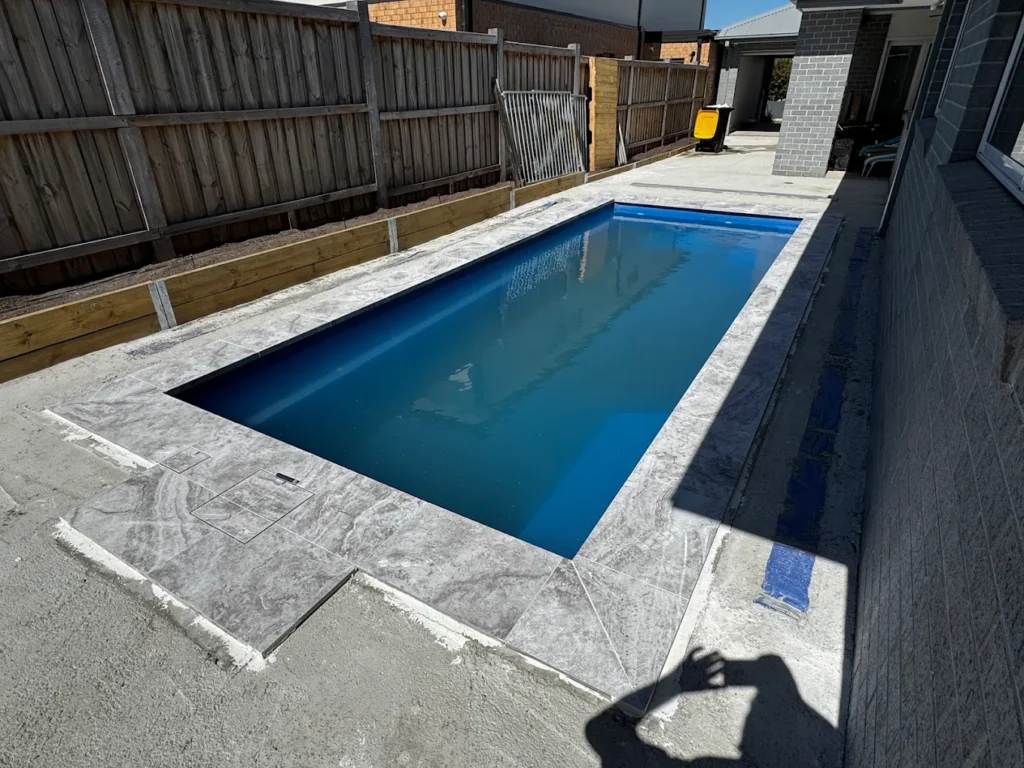
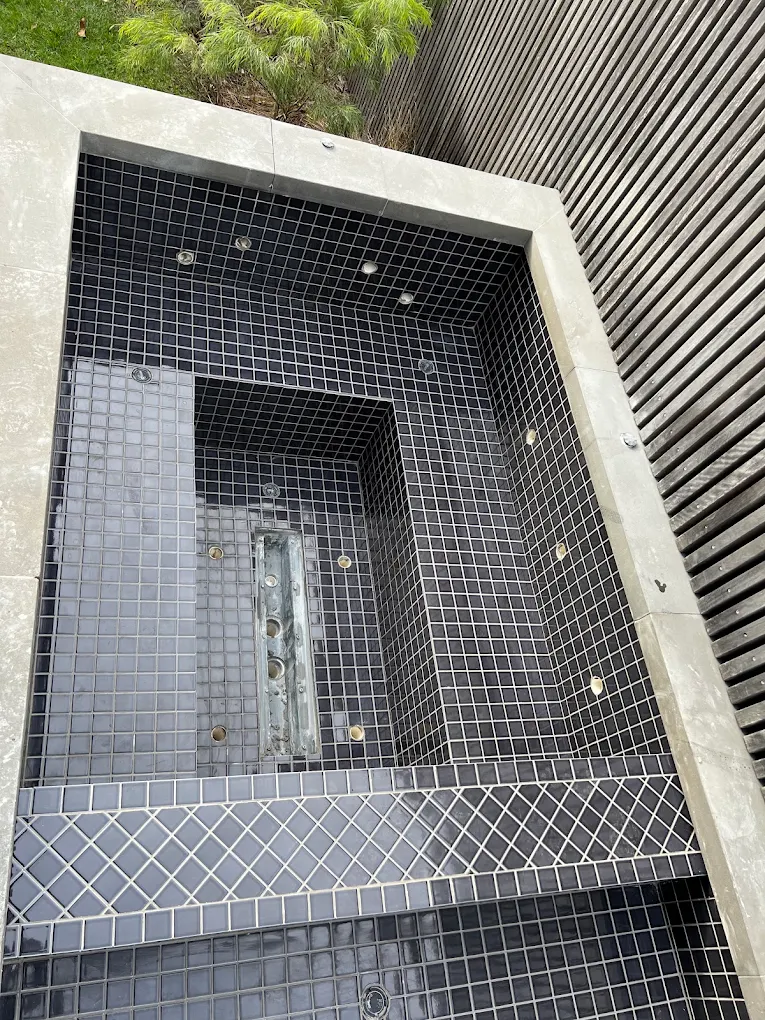
Areas We Service
Pool resurfacing across Melbourne’s bayside and inner east:
Brighton · Brighton East · Hampton · Beaumaris · Mount Eliza
FAQ
Why is my waterline tile falling off?
Adhesive failure. The most common causes are tiles installed over paint, tiles installed over a failing render, water tracking behind the tile through failed grout, or movement at the coping line. Retiling without fixing the cause repeats the failure.
Can any pool be tiled?
Concrete and gunite shells, yes, regardless of the current interior — the preparation work determines what’s possible. Fibreglass shells are a different matter, and tiling over them is rarely appropriate.
What are drummy tiles?
Tiles still in place but no longer bonded to the substrate. Tap along the waterline; a hollow sound means the bond has failed. They will come off.
Should I retile at the same time as resurfacing?
Almost always. The pool is already drained, and a new interior will outlast the old tile band. Leaving the tiles means draining again in a few years and disturbing the new surface.
Can you tile over the existing tiles?
No. The adhesive bonds to the substrate, not to a glazed surface. Existing tile and adhesive must come off.
Why doesn't the finished colour match the sample?
Because water colour depends on depth, light angle, and whether the pool is indoors or outdoors — not just the tile colour. Sample images are magnified; the tiles are smaller in reality. Ask to see a filled pool in daylight.
Could there be asbestos under my coping?
Possibly, on pre-mid-1990s pools. Asbestos cement sheeting was used as structural support over some skimmer boxes, concealed beneath coping and tiles. Test before removal.
Get a Free Pool Assessment
We’ll inspect the pool, tell you honestly whether it needs a resurface or a retile, and give you a written scope before you commit to anything.