Pool Resurfacing Melbourne
Pool resurfacing is the removal of a failed interior finish and the rebuilding of a new one over the pool shell beneath it.
It is not a repaint and it is not a repair. The old surface is stripped back to sound substrate, any exposed reinforcement is treated, a bond coat is applied, and a new interior — pebble, quartz-based render, glass bead, or fibreglass gelcoat — is installed.
The shell itself is usually sound. A concrete pool shell typically outlasts three interior finishes. It is the surface that fails.
We resurface concrete, gunite, pebblecrete, marblesheen and fibreglass pools across Melbourne’s bayside and inner east.
Interior finishes fail in ways specific to what they’re made of. What you’re seeing tells you what you have.
Pebble and pebblecrete
The cement matrix binding the stones erodes. The surface goes rough underfoot and cuts feet. Acid washing accelerates this — it strips more matrix. It does not fix it.
Marblesheen
Stains that won’t brush out. Chalking. Delamination, where sheets of the finish separate from the shell and sound hollow when tapped.
Quartzon and quartz-based renders
Crumbling, separation from the substrate, and loss of the reflective aggregate.
Fibreglass gelcoat
Blistering and flaking, caused by osmosis — water permeating the resin layer. Once it starts, it spreads.
Painted interiors
Chalking, where the binder breaks down and leaves a powder on your hand. Adhesion loss, where the coating lifts in sheets.
Any interior
Rust bleeding through from behind. That is rebar corrosion. The steel is expanding and spalling concrete off the back of the surface. It is structural; it worsens on a curve rather than a line, and resurfacing over it without treatment will fail within two seasons.
Before Anything: Asbestos Testing on Pre-1990s Pools
If your pool was built or last resurfaced before the mid-1990s, the interior may contain asbestos. Marblesheen was commonly manufactured with added asbestos fibre for chemical and crack resistance, and it is not visually identifiable.
Chipping out an old interior is a work process that can release fibres. Under Victoria’s Occupational Health and Safety Regulations 2017, removal of non-friable asbestos-containing material may only be done unlicensed if the total area does not exceed 10 square metres and total removal time in any seven-day period does not exceed one hour. A pool interior exceeds both.
We test before we quote. Where testing indicates asbestos, we do not commence surface work until a licensed removalist has completed removal and a clearance certificate has been issued.
Before Anything: Asbestos Testing on Pre-1990s Pools
| Finish | What it is | Best suited to |
|---|---|---|
| Pebble / pebblecrete | Exposed stones in cement. Textured, non-slip. | Best for concrete and gunite pools where durability, grip and a natural textured finish are priorities. It works well in family pools, on steps and benches, and in other high-use areas. |
| Quartz-based render | Marble-based interior with quartz aggregate. | Best for concrete and gunite pools where a smoother, more refined interior is preferred. Quartz finishes offer strong colour depth and a more comfortable feel underfoot than coarse pebble. |
| Glass bead | Glass aggregate in cement. Highly reflective. | Best for premium concrete and gunite pool renovations where water sparkle, colour depth and a decorative finish are the main priorities. Glass bead performs especially well in sunny outdoor pools. |
| Fibreglass gelcoat | Resin surface layer. Recoated, never rendered. | Best for fibreglass pools with a sound shell but a faded, chalked, blistered or worn surface. The existing shell is prepared and recoated with a compatible fibreglass system. |
Choosing a colour. The filled-pool colour will look different from the sample because water depth, sunlight, shade and surface reflectivity all affect the final appearance. For the most accurate comparison, view completed pools in daylight rather than relying only on a small sample.
Which finish lasts longest?
The lifespan of a pool interior depends as much on preparation and water chemistry as it does on the finish itself. A well-prepared shell, correct application thickness, controlled curing and balanced water will have more influence than the product name alone.
- Pebble / pebblecrete: commonly around 15–25 years. It is a durable choice for busy family pools and areas where slip resistance matters.
- Quartz-based render: commonly around 10–20 years. It offers a smoother, more refined feel than traditional pebble.
- Glass bead: commonly around 10–20+ years when installed as a complete approved system. It is selected mainly for its reflective, premium appearance.
- Fibreglass gelcoat: commonly around 8–15 years before another maintenance cycle may be needed.
For concrete pools, pebble is usually chosen for toughness, quartz for a smoother finish and glass bead for visual impact. Fibreglass gelcoat is used on fibreglass shells and should not be compared as though it were a cement render for concrete pools.
Before Anything: Asbestos Testing on Pre-1990s Pools
1. Assessment
We inspect the pool full, then again drained. Substrate condition is not visible through water.
2. Asbestos testing
Pre-1990s pools only. Sample tested by a NATA-accredited laboratory before any quote for surface removal is issued.
3. Fixed written quote
Scope, finish, timeline and price, in writing, before work begins.
4. Drain and hydrostatic valve removal
A drained pool is unprotected against groundwater pressure beneath the shell. The hydrostatic relief valve is removed and inspected while the pool is empty. A seized valve is found here or not at all.
Guide: Hydrostatic Valves and Pool Lifting
5. Preparation
The failed interior is stripped back to sound substrate. Exposed rebar is treated. A bond coat is applied.
6. Application
The new interior is installed. Where waterline tiling or coping is in scope, it is done now, while the pool is drained.
Pool Tiling Melbourne · Pool Coping Replacement
7. New valve, controlled fill, start-up chemistry
A new hydrostatic relief valve is installed before refilling. Interior finishes require a controlled fill and a managed water-chemistry regime. Getting the first thirty days wrong permanently marks a new surface.
Pool Resurfacing Cost in Melbourne
| Finish | Indicative Melbourne range |
|---|---|
| Pebble | $8,000–$15,000 |
| Quartz-based | $10,000–$18,000 |
| Glass bead | $12,000–$22,000+ |
| Fibreglass re-gelcoat | $9,000–$18,000+ |
These figures are general Melbourne budgeting ranges for a typical residential pool. They are not fixed quotations. The final cost depends on the pool size, the condition of the shell beneath the existing finish, site access, demolition and waste removal, the selected product and any repairs identified after the pool is drained.
We can usually provide an initial estimate after inspecting the filled pool and reviewing its history. The final scope is confirmed once the pool has been drained and the existing surface has been closely inspected.
What can increase the price: widespread delamination, exposed or corroded reinforcement, active cracks, asbestos-containing materials, restricted machinery access, premium aggregate blends, major tile or coping work and abnormal groundwater management.
How Long Pool Resurfacing Takes
A standard residential pool resurface usually takes 7–12 working days from drainage to the start of refilling, provided the shell is sound and no major hidden defects are uncovered.
A straightforward pebble, quartz or glass-bead resurface may be completed in around 5–8 working days. Pools requiring extensive removal, concrete repairs, reinforcement treatment, waterline tiling or coping work commonly take 2–4 weeks.
A fibreglass re-gelcoat generally takes around 7–14 working days, depending on the amount of blister repair, laminate preparation, weather conditions and the cure requirements of the selected coating system.
Typical project stages:
- Draining and initial inspection: 1 day
- Removing the failed surface: 1–3 working days
- Shell, crack and reinforcement repairs: 1–5 working days
- Bond coat and new interior application: 1–3 working days
- Final detailing and initial refill: 1–2 days
These timeframes exclude licensed asbestos removal, structural engineering, major crack reconstruction and prolonged groundwater management. Rain, low temperatures and high humidity can also delay preparation and application.
Once a new cement-based interior has been applied, the pool is filled continuously so the surface does not dry unevenly. Filling a typical residential pool commonly takes around 18–36 hours. The new finish then requires a managed 28-day start-up period, including regular brushing, filtration and careful water balancing. The pool may be filled and operational before the end of this period, but the surface is still curing and must be maintained correctly.
The final program is confirmed after the pool is drained and the existing finish has been removed far enough to inspect the substrate underneath.
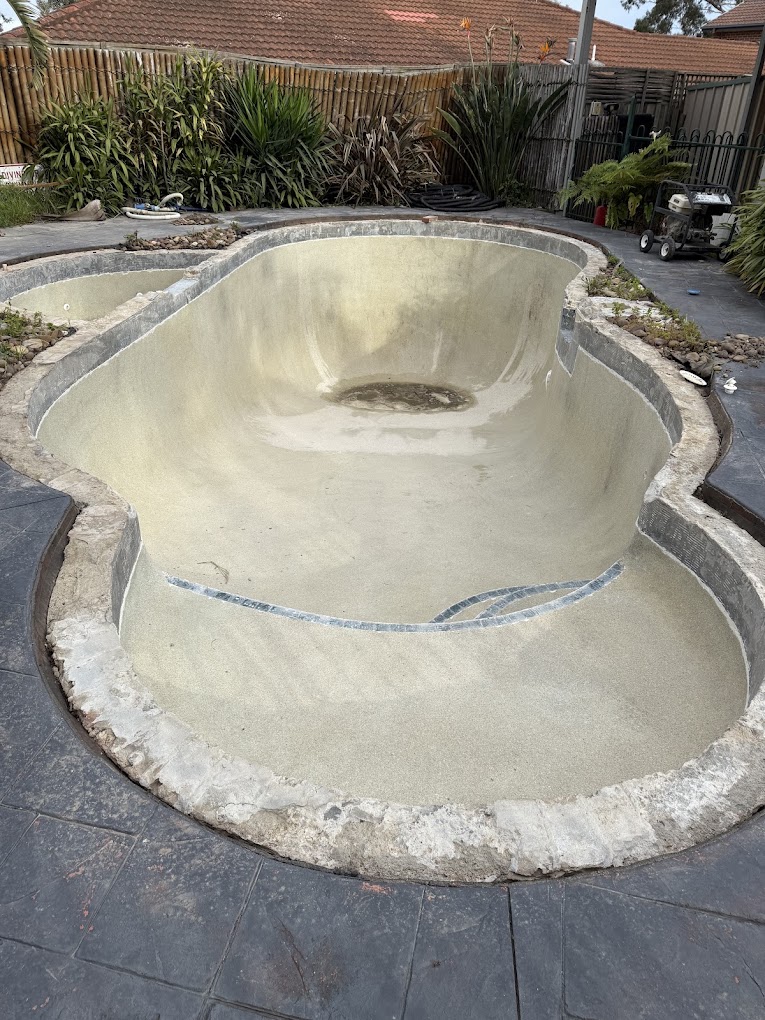
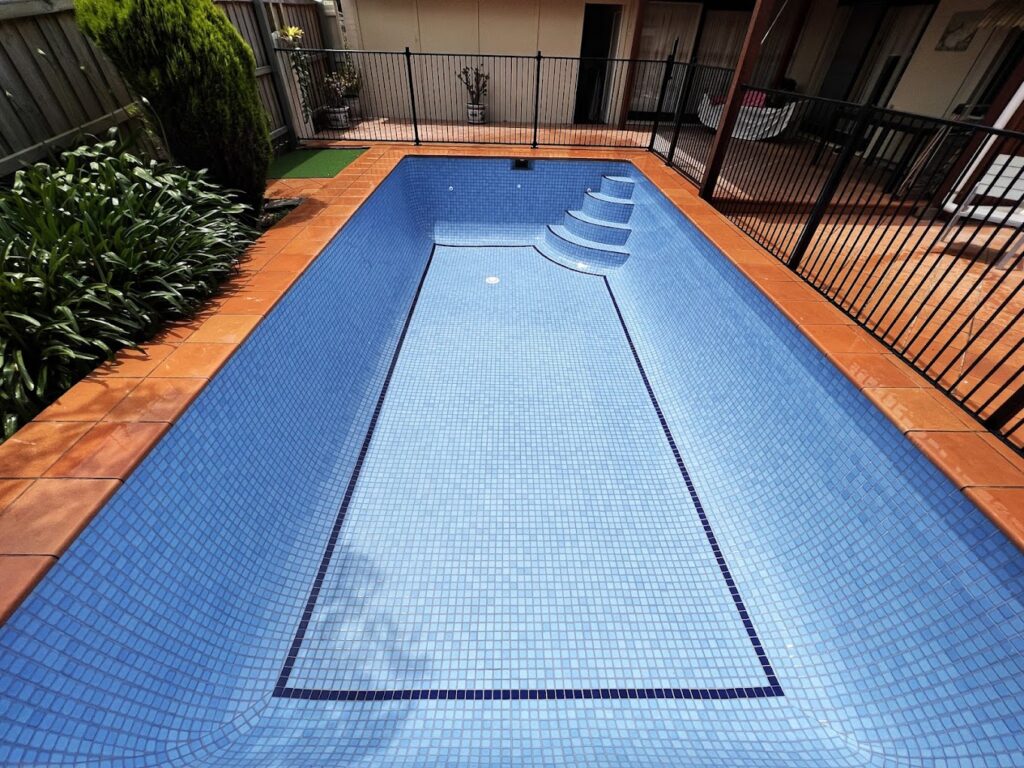
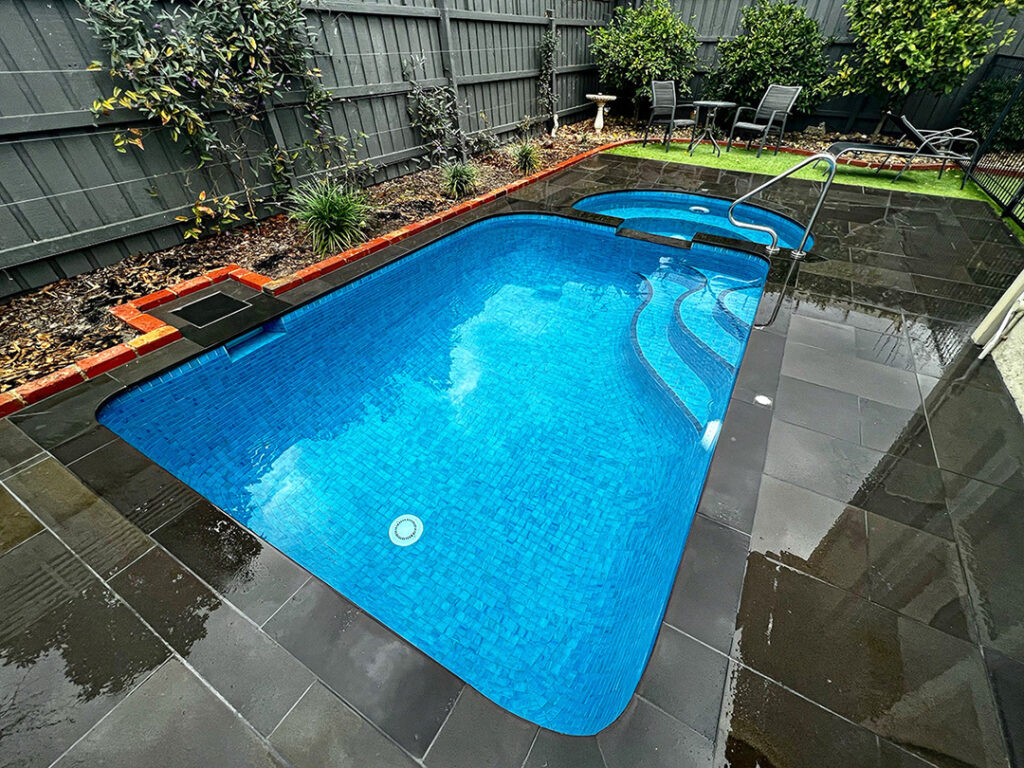
Recent Resurfacing Work
Areas We Service
Pool resurfacing across Melbourne’s bayside and inner east:
Brighton · Brighton East · Hampton · Beaumaris · Mount Eliza
FAQ
How long does pool resurfacing last?
Most professionally installed pool surfaces last around 10–25 years. Pebble and glass-bead finishes commonly last 15–25 years, quartz or marblesheen around 10–20 years, and fibreglass gelcoat around 8–15 years. Actual lifespan depends on preparation, workmanship, water chemistry and how well any cracks or corrosion were repaired before resurfacing.
Can you resurface a fibreglass pool?
Not with a render. Fibreglass shells are re-gelcoated, flow-coated or lined. A cementitious render applied over fibreglass has nothing to bond to and will delaminate.
Should I resurface or replace my pool?
If the shell is structurally sound, resurface. Replacement costs multiples and requires excavation access. Replace when the shell has genuinely failed, the pool sits in the wrong position, or you want a different size or shape.
Could my pool interior contain asbestos?
If it was built or last resurfaced before the mid-1990s and has a marblesheen interior, it’s possible. Asbestos was added to marblesheen for chemical and crack resistance and is not visually identifiable. Test before any surface work.
Why does my pool need a new hydrostatic valve?
A drained pool has no water mass resisting groundwater pressure beneath the shell. The relief valve lets groundwater in to equalise it. A blocked or seized valve is only discoverable once the pool is empty, and refilling over a failed valve leaves the shell unprotected the next time the water table rises.
Can I resurface my pool in winter?
Yes. Cure times are longer and rain delays more frequent. Lead times are usually shorter.
Why doesn't the finished colour match the sample?
Because water colour is a function of depth, light angle and the finish’s reflectivity, not just the surface colour. Ask to see a filled pool in daylight, not a swatch.
Get a Free Pool Assessment
We’ll inspect the pool, tell you honestly whether it needs a resurface or a retile, and give you a written scope before you commit to anything.