Pool painting Melbourne
Pool painting is the application of a protective coating system to the interior of a concrete pool shell.
It is a maintenance finish, not a permanent one. Where pebble, quartz and tile are structural surfaces measured in decades, paint is a coating measured in years, and it is recoated on a cycle rather than replaced.
Three coating systems dominate: two-pack epoxy, chlorinated rubber, and acrylic. They are not intermixable. Applying one over another without identifying what is already there is the most common cause of paint failure in Melbourne pools.
We paint and repaint concrete and gunite pools across Melbourne’s bayside and inner east.
Identifying the Existing Coating
Identifying the existing coating is the first step.
Pool coatings are not automatically compatible with one another. Tile adhesive will not bond reliably to paint, and a new pool coating can fail if it is applied over the wrong existing system. Older pools may have several layers of epoxy, chlorinated rubber or acrylic coating built up over time, with each layer only as secure as the coating beneath it.
Before we recommend repainting, we inspect the surface for chalking, blistering, peeling and weak adhesion. We then test a small, discreet area using controlled solvent and scrape tests to help identify the existing coating and determine whether it is firmly bonded.
The solvent response helps distinguish between common coating types, while the scrape and adhesion checks show whether the existing layers can remain or need to be removed. Where the coating cannot be identified with confidence, or several incompatible layers are present, the safer approach is to strip the pool back to a sound, known substrate before applying a new system.
An initial estimate can be provided from an inspection, but the final preparation scope is confirmed after the pool is drained and the coating has been tested directly.
The Three Coating Systems
Two-pack epoxy
Resin and hardener mixed on site, curing by chemical reaction rather than evaporation. The hardest, longest-lasting and most chemically resistant of the three. Also the least forgiving of poor surface preparation and the least tolerant of application in the wrong conditions.
Chlorinated rubber
A solvent-based coating that dries by evaporation. More forgiving to apply, softer, shorter service life than epoxy. Widely used on older Melbourne pools.
Acrylic
Water-based. The most forgiving and the shortest-lived. Often used as a maintenance recoat over an existing acrylic system.
Coating compatibility must be confirmed before repainting. An existing epoxy, chlorinated-rubber or acrylic coating may sometimes be recoated with a compatible system, but only when the old coating has been positively identified, remains firmly bonded and the new product manufacturer permits that application. The coating name alone is not enough to approve a recoat.
We assess two-pack epoxy, chlorinated-rubber and water-based acrylic pool coatings. The system recommended for a particular pool is confirmed after drainage, cleaning and direct testing of the existing surface. Two-pack epoxy is generally considered where a hard, chemically resistant finish is required and the substrate can be prepared to the specified standard. Chlorinated-rubber or acrylic systems are considered only where the existing coating, substrate condition and selected product specification support their use.
Our inspection includes a visual assessment for chalking, blistering and delamination, followed by controlled scrape and solvent-response testing in a discreet area. If the existing coating cannot be identified with confidence, is poorly bonded, or consists of several incompatible layers, we do not rely on a simple maintenance recoat. The affected coating must be removed back to a sound, known substrate before a new system is specified.
The written quotation identifies the coating system proposed, the preparation method, included repairs, primer requirements, number of coats or target film thickness, curing period and any limits arising from the existing substrate. Final compatibility is governed by the selected manufacturer’s current technical data rather than by a general rule.
When a Pool Needs Repainting
Chalking
Run your hand along the wall and it comes away with a fine powder. The binder holding the pigment has broken down under UV and chlorine. Chalking is the coating’s end of life announcing itself.
Adhesion loss
The coating lifts in sheets or flakes, often around fittings, steps and the waterline first. Usually means the previous coat went over an incompatible system, or over a surface that wasn’t properly prepared.
Fading and colour loss
Cosmetic on its own. Combined with chalking, it means the same thing.
Blistering
Water or solvent trapped beneath the coating. On a painted pool this usually indicates moisture moving through the shell from behind — which is a substrate problem, not a paint problem. Repainting will not fix it.
The coating is gone in patches
The concrete beneath is exposed. Further delay means the shell itself is now taking the chemistry.
Pool Painting Cost in Melbourne
| Work | Indicative Melbourne range |
|---|---|
| Repaint, existing system compatible | $5,500–$10,000 |
| Repaint requiring full coating removal | $9,000–$17,000+ |
| First paint over bare render | $6,500–$12,000 |
These are general Melbourne budgeting ranges for a typical residential concrete pool. They are not fixed quotations. Final pricing depends on the pool size, the coating system selected, the condition and compatibility of the existing coating, the amount of mechanical preparation required, access and any repairs identified after drainage.
Pricing assumptions: The compatible-recoat range assumes the existing coating has been positively identified, remains firmly bonded and can be recoated under the selected product specification. Full-removal pricing allows for mechanically removing incompatible or poorly bonded coating before rebuilding the system. Bare-render pricing assumes the render is sound, cured and suitable for preparation and priming.
We can usually provide an initial estimate after inspecting the filled pool and reviewing its coating history. The final scope is confirmed once the pool has been drained, dried and tested for coating type, adhesion and substrate condition.
What the indicative price excludes. Unless specifically listed in the written quotation, these ranges exclude structural engineering, repair of active shell cracks, major concrete reconstruction, reinforcement-corrosion treatment, asbestos sampling and licensed removal, waterline tile or coping replacement, leak detection, concealed plumbing repairs, electrical work, replacement of lights or fittings, crane access, abnormal groundwater management, refill water and ongoing chemical servicing.
The written quote should identify the coating brand and system, preparation method, included repairs, primer, number of coats or target film thickness, cure period and warranty conditions. Hidden incompatible layers, damp substrate, hollow render, asbestos-containing material or structural defects discovered during preparation are treated as variations and approved in writing before additional work proceeds.
`How Long Pool Painting Takes
A standard residential pool repaint usually takes 7–14 working days from drainage to refill, depending on the existing coating, preparation required, weather and the selected epoxy system.
Where the existing coating is compatible and remains firmly bonded, preparation and repainting may take around 5–8 working days, followed by the required curing period before the pool is filled.
If the old coating must be completely removed, the project commonly takes 10–20 working days. Additional time may be required for multiple coating layers, blister repairs, damp render, crack treatment or concrete repairs discovered after drainage.
A typical pool-painting program includes:
- Drainage and coating identification: 1–2 working days
- Cleaning, scraping and mechanical preparation: 2–5 working days
- Substrate and crack repairs: 1–4 working days
- Primer and epoxy application: 2–3 working days
- Curing before refill: commonly 7–10 days after the final coat
The pool must not be refilled until the selected coating has completed its specified immersion cure. Cure time is temperature-dependent, and cooler conditions may extend the waiting period beyond ten days. The coating manufacturer’s written cure requirements always take priority over a general timeline.
Rain, condensation, low surface temperatures and high humidity can delay preparation, coating and curing. For this reason, most Melbourne pool-painting projects are scheduled between September and March, although suitable dry-weather windows may also be available outside this period.
These timeframes exclude asbestos removal, structural repairs, prolonged groundwater management and major rectification of incompatible coating layers.
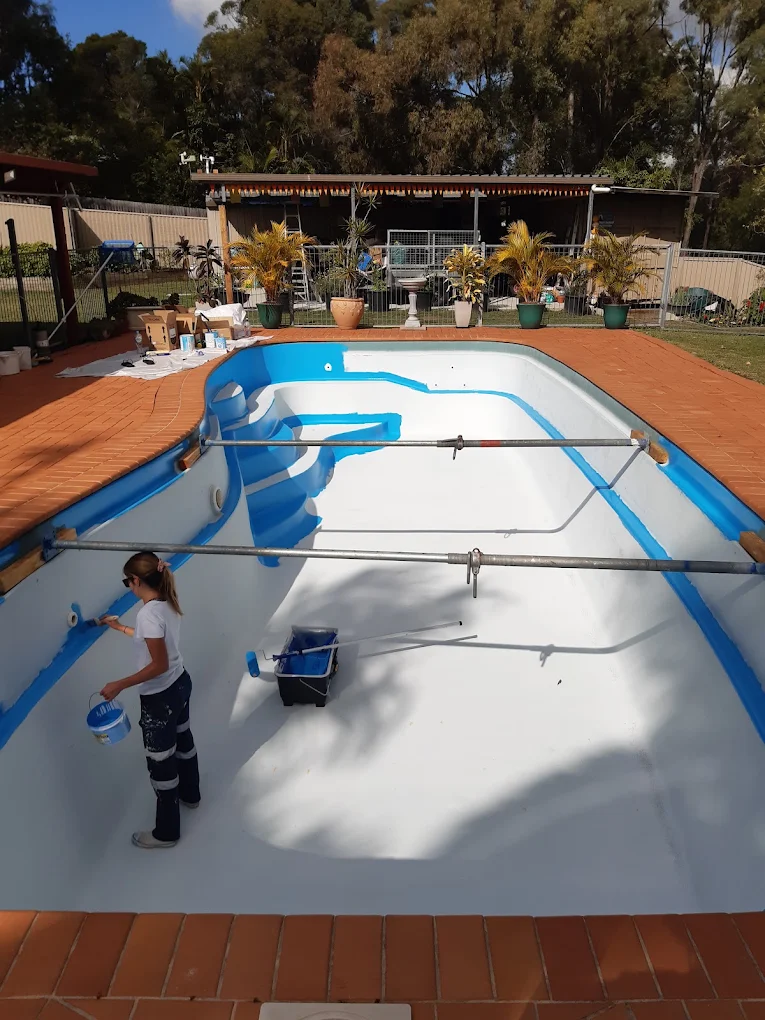
Recent Pool Painting Work


Areas We Service
Pool resurfacing across Melbourne’s bayside and inner east:
Brighton · Brighton East · Hampton · Beaumaris · Mount Eliza
FAQ
How long does pool paint last?
Two-pack epoxy pool paint typically lasts around 7–10 years. Chlorinated-rubber paint usually lasts about 3–5 years, while water-based acrylic pool paint generally lasts around 2–4 years. Actual lifespan depends on surface preparation, coating compatibility, cure time and ongoing water chemistry.
Can I paint over my existing pool paint?
Only if the existing system is compatible and sound. Epoxy over epoxy, chlorinated rubber over chlorinated rubber. Crossing systems requires complete removal of the old coating, not preparation over it.
How do I know what paint is already on my pool?
You usually can’t, by eye. A solvent test on a discreet area is the standard method — different coatings soften, lift or resist differently. Any renovator quoting a repaint without doing this is guessing.
Is painting cheaper than resurfacing?
Up front, yes. Over the life of the pool, it depends on how many recoat cycles you go through. Paint is a maintenance finish. A rendered interior is not.
Can I tile over a painted pool?
No. Tile adhesive requires a mechanically sound, absorbent substrate. Paint is neither. The paint must come off first.
→ Pool Tiling Melbourne
Could there be asbestos under my pool paint?
If the pool predates the mid-1990s and the paint sits over marblesheen, possibly. Abrasive preparation is exactly the process that releases fibres. Test before blasting.
My pool paint is blistering. Will repainting fix it?
Probably not. Blistering usually means moisture is moving through the shell from behind. That is a substrate or waterproofing problem. A new coating over it will blister too.
Get a Free Pool Assessment
We’ll inspect the pool, tell you honestly whether it needs a resurface or a retile, and give you a written scope before you commit to anything.