Pool Leak Detection & Crack Repair Melbourne
Pool leak detection is the process of finding where a pool is losing water — and crack repair is fixing the structural faults that are one of the causes.
A pool that drops more water than evaporation accounts for has a leak. The water is escaping through one of a limited number of paths: a crack in the shell, a failed fitting, the skimmer or return lines, or the plumbing beneath the paving.
Detection is diagnosis. It isolates which path, before anything is dug up or drained. Repair follows the diagnosis — and the repair for a shell crack is nothing like the repair for a pipe under the pavers.
We detect leaks and repair cracks on concrete and gunite pools across Melbourne’s bayside and inner east.
First: Is It Actually a Leak?
Before you pay anyone, rule out evaporation. It costs you a bucket and a day.
An uncovered Melbourne pool loses roughly 20–30mm a week to evaporation in summer — more in wind and heat, less in cool weather. Splash-out from swimming adds to it. Below that, you probably don’t have a leak.
The bucket test
- Fill a bucket with pool water and stand it on the top step, part-submerged.
- Mark the water level inside the bucket, and the pool level outside it.
- Leave 24 hours, pump running as normal.
- Compare. Evaporation affects both equally. If the pool has dropped more than the bucket, the difference is your leak.
Run it once with the pump on and once with it off. A leak that only shows with the pump running is on the pressure side of the plumbing. One that shows with the pump off is in the shell or on the suction side. That single distinction narrows the search enormously.
Where Pools Leak
The shell
A structural crack through the interior and into the concrete. These often show as a wet line that never dries, a persistent damp patch in the surrounding ground, or a crack that has stained differently to the surface around it.
The skimmer box
The join between a plastic skimmer and the concrete shell is a common failure point. The two materials move differently and the seal between them fails. A leak that stops when the water drops below the skimmer throat is pointing straight at it.
Return and suction lines
The plumbing running under the paving and the surrounding ground. A pressure-side leak shows only when the pump is running. These are the hardest to find and the most disruptive to fix, because access means lifting paving.
Light niches and fittings
Penetrations through the shell — lights, returns, cleaner lines. Any point where something passes through the concrete is a potential path.
The hydrostatic valve
A relief valve that has failed open lets pool water drain out into the ground when the water table is low. A leak with no visible crack and no wet ground, that slows as the pool drops, can be a valve stuck open.
How leaks are found
Detection is a process of elimination, done in order, before anything is excavated.
Bucket test
Confirms a leak exists and separates evaporation from loss. Pump-on versus pump-off isolates pressure side from suction side and shell.
Dye testing
With the pump off and the water still, dye is released near suspected points — cracks, the skimmer throat, fittings, light niches. Moving water draws the dye into the leak and shows the path.
Pressure testing the plumbing
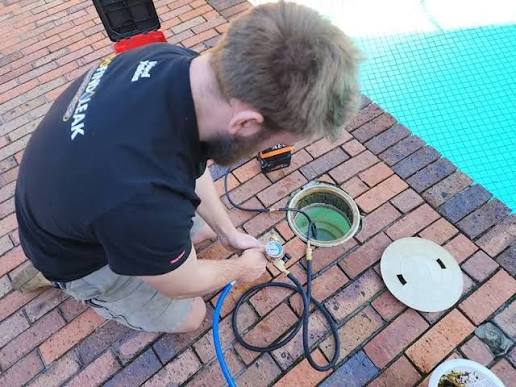
Lines are isolated and pressurised individually. A line that won’t hold pressure is the leaking line. This is how a plumbing leak is found without digging up the whole yard — you dig where the test tells you to.
Where the diagnosis leads
Only once the path is known does anything get drained, cut, or excavated. A shell crack, a skimmer seal, and a return line under the pavers are three different repairs with three different costs. Detection is what stops you paying for the wrong one.
Crack Repair
Not every crack leaks, and not every crack is structural. Telling the difference is the job.
Surface crazing
Fine, shallow cracks in the interior finish that do not penetrate the shell. Cosmetic. Addressed by resurfacing, not structural repair.
Structural cracks
Cracks through the shell. These leak, and they indicate movement — ground movement, hydrostatic pressure, or reinforcement corrosion expanding the concrete from within. A structural crack repaired without addressing the cause reopens.
How structural cracks are repaired
A stable crack is routed out, injected with epoxy or polyurethane, the reinforcement treated, and the area waterproofed and refinished. Active movement, corroded reinforcement or shell movement may require engineering assessment, concrete removal and structural rebuilding — a different order of work.
Why a Leak Is Not a "Wait and See" Problem
A leak does not stay the same size.
Water escaping through a shell crack reaches the reinforcement. Steel corrodes and expands. Expansion widens the crack. A wider crack leaks faster and admits more water to more steel.
Water escaping into the ground undermines the material supporting the shell and the paving. Ground washes away, support is lost, and the movement that may have caused the crack gets worse.
And a pool that is quietly losing and being topped up is quietly wasting water, chemicals and heating the entire time.
The cost of finding a leak is small. The cost of the structural repair it becomes is not.
Pool Leak Detection & Repair Cost in Melbourne
| Work | Indicative Melbourne range |
|---|---|
| Leak detection and diagnosis | $450–$1,200 |
| Skimmer box reseal | $700–$2,000 |
| Structural crack repair, localised | $1,500–$5,000 |
| Structural crack repair, active movement | $6,000–$20,000+ |
| Plumbing line repair, access required | $2,500–$10,000+ |
These are general Melbourne budgeting ranges, not fixed quotations. Leak detection and repair are priced separately: the first stage identifies the source of water loss, and the second stage repairs the confirmed fault.
The detection range assumes a residential pool requiring inspection, dye testing and targeted pressure testing. Larger pools, multiple plumbing circuits, inaccessible equipment or faults that cannot be isolated during the first visit may cost more.
A skimmer-box reseal is generally at the lower end when the leak is limited to the faceplate, throat or surrounding seal. Replacement of a cracked skimmer, removal of coping or excavation behind the pool wall can move the repair beyond this range.
Localised crack pricing assumes the crack is stable and can be prepared, sealed and finished without major reconstruction. Active movement, displaced concrete, water entering under pressure or corroded reinforcement may require engineering, concrete removal and structural rebuilding. Serious pool defects can extend into tens of thousands of dollars once renovation and reinforcement repairs are included.
Plumbing-line repair costs depend heavily on access. A repair beside exposed equipment is very different from a failed return or suction line beneath paving, coping or landscaping. The range may include excavation and reinstatement, but electrical work, major paving replacement, structural repairs and abnormal groundwater management should be listed separately in the written quotation.
The final repair scope is confirmed only after the leak has been located and the affected area has been opened far enough to assess the damage.
How Long Leak Detection Takes
Most residential pool leak-detection inspections take around 2–4 hours and are completed in a single visit. Larger pools, multiple plumbing lines or intermittent leaks may require additional testing or a follow-up visit.
Repair time depends on what the inspection finds. A minor skimmer or fitting reseal may take a few hours, while an underground plumbing repair may take 1–3 days. Structural cracks involving movement, reinforcement damage or engineering can take several days to several weeks to assess and repair.
Recent Leak Detection & Repair Work

Areas We Service
Pool resurfacing across Melbourne’s bayside and inner east:
Brighton · Brighton East · Hampton · Beaumaris · Mount Eliza
FAQ
How do I know if my pool is leaking or just evaporating?
The bucket test. Stand a bucket of pool water on the top step, mark the level inside and outside, wait 24 hours with the pump running normally. Evaporation affects both equally. If the pool drops more than the bucket, the difference is your leak.
How much water loss is normal?
An uncovered Melbourne pool loses roughly 20–30mm a week to evaporation in summer, plus splash-out. Consistently more than that suggests a leak.
My pool only leaks when the pump is on. What does that mean?
The leak is on the pressure side of the plumbing — the return lines. A leak that shows with the pump off is in the shell or on the suction side. That distinction is the first step in locating it.
Can you find a leak without draining the pool?
Usually, yes. Dye testing and pressure testing are done with the pool full. Draining is a last resort, and detection is specifically what avoids draining and excavating unnecessarily.
Do all cracks leak?
No. Fine surface crazing in the interior finish is cosmetic and doesn’t penetrate the shell. Structural cracks go through the shell and leak. Telling them apart is the diagnosis.
Is a leaking pool urgent?
More than it looks. Water reaching the reinforcement corrodes it, and corroding steel widens the crack. Water escaping into the ground undermines the shell’s support. A small detection cost now avoids a large structural cost later.
Could a failed hydrostatic valve be the cause?
Possibly. A relief valve stuck open can let pool water drain into the ground when the water table is low. It presents as a leak with no visible crack and no wet ground. It’s one of the things detection checks.
Get a Free Pool Assessment
We’ll inspect the pool, tell you honestly whether it needs a resurface or a retile, and give you a written scope before you commit to anything.